Study without daily limits with Pro
Contents 目录 目錄
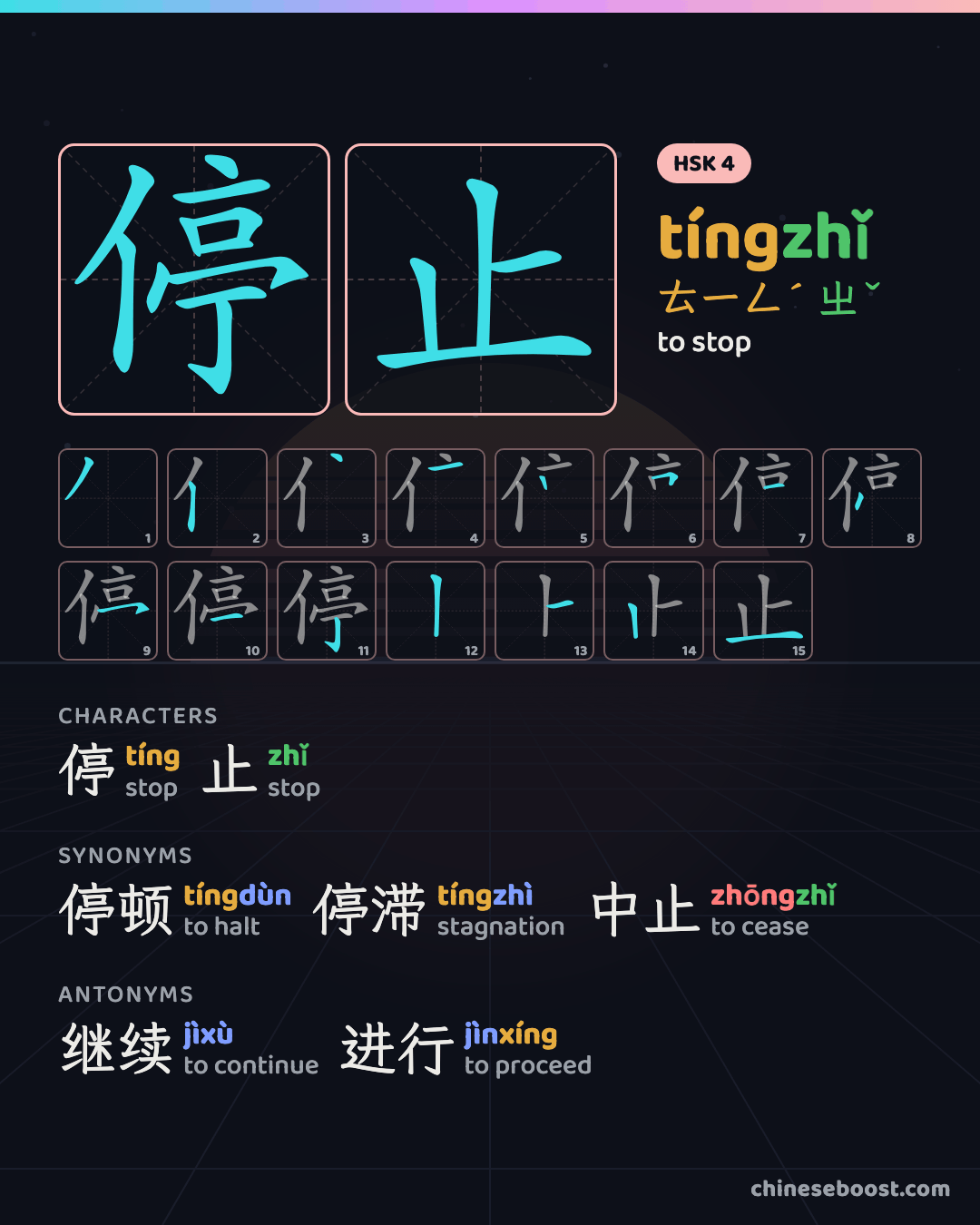
tíngzhǐ
stop读音 讀音
Character by character 单字 單字 Synonyms and antonyms 近义词和反义词 近義詞和反義詞 Homophones 同音词 同音詞 Homophones 同音词 同音詞
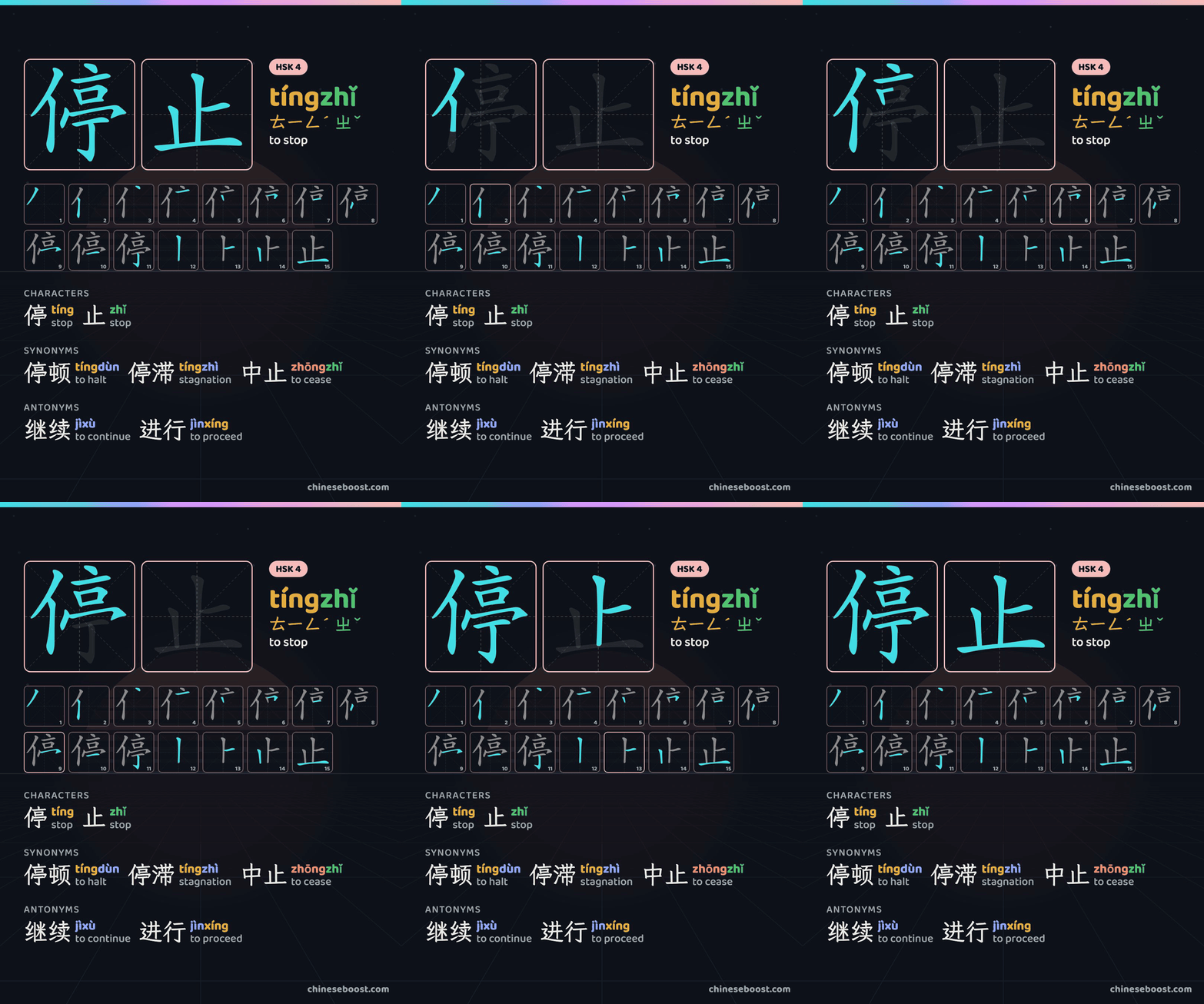
Share card 分享
Character by character
Synonyms and antonyms
Synonyms 近义词
停顿
tíng dùn
停顿状态
a state of standstill
稍作停顿
to pause briefly
停滞
tíng zhì
停滞不前
stagnant and not advancing
发展停滞
development stagnates
中止
zhōng zhǐ
中止比赛
to call off the match
谈判中止
talks break off
Antonyms 反义词
继续
jì xù
继续研究
to continue research
比赛继续
the match goes on
进行
jìn xíng
进行试验
to conduct an experiment
着手进行
to start carrying out
Telling them apart
停止 means to stop doing something and can take an object; it is used for people and things, in both speech and writing. 停滞 means to be held up or to slow down in progress, usually of abstract things like society or thought; it is written, and cannot take an object.
Other words read
tíng zhǐ
tingzhi with other tones
停滞
tíng zhì stagnation
挺直
tǐng zhí upright
停职
tíng zhí suspend (sb) from duties
听治
tīng zhì handle government affairs
艇只
tǐng zhī boats
Near homophones of tingzhi
亭子
tíng zi pavilion
听子
tīng zi can
梃子
tǐng zi of a door leaf or window sash
桯子
tīng zi slender metal shank at the front of an awl etc
Other words read
tíng zhǐ
tingzhi with other tones
停滯
tíng zhì stagnation
挺直
tǐng zhí upright
停職
tíng zhí suspend (sb) from duties
聽治
tīng zhì handle government affairs
艇只
tǐng zhī boats
Near homophones of tingzhi
亭子
tíng zi pavilion
聽子
tīng zi can
梃子
tǐng zi of a door leaf or window sash
桯子
tīng zi slender metal shank at the front of an awl etc
Example sentences and grammar articles using 停止
Save or share this card
The GIF writes the strokes out. Share it to a chat, or keep the PNG in a flashcard deck.
Chinese Boost Pro
Save as many words and example sentences as you like. Use Review and
start new Exercises without daily limits. Your first subscription
includes a 7-day free trial.
Explore Pro
Sign up for a free Chinese Boost account
Save the words and sentences you find here to your own list, and hear them
read aloud. You can export the list to your flashcards whenever you like.
Create a free account
Sources