Study without daily limits with Pro
-
of life
-
Character by character
Synonyms and antonyms
Telling them apart
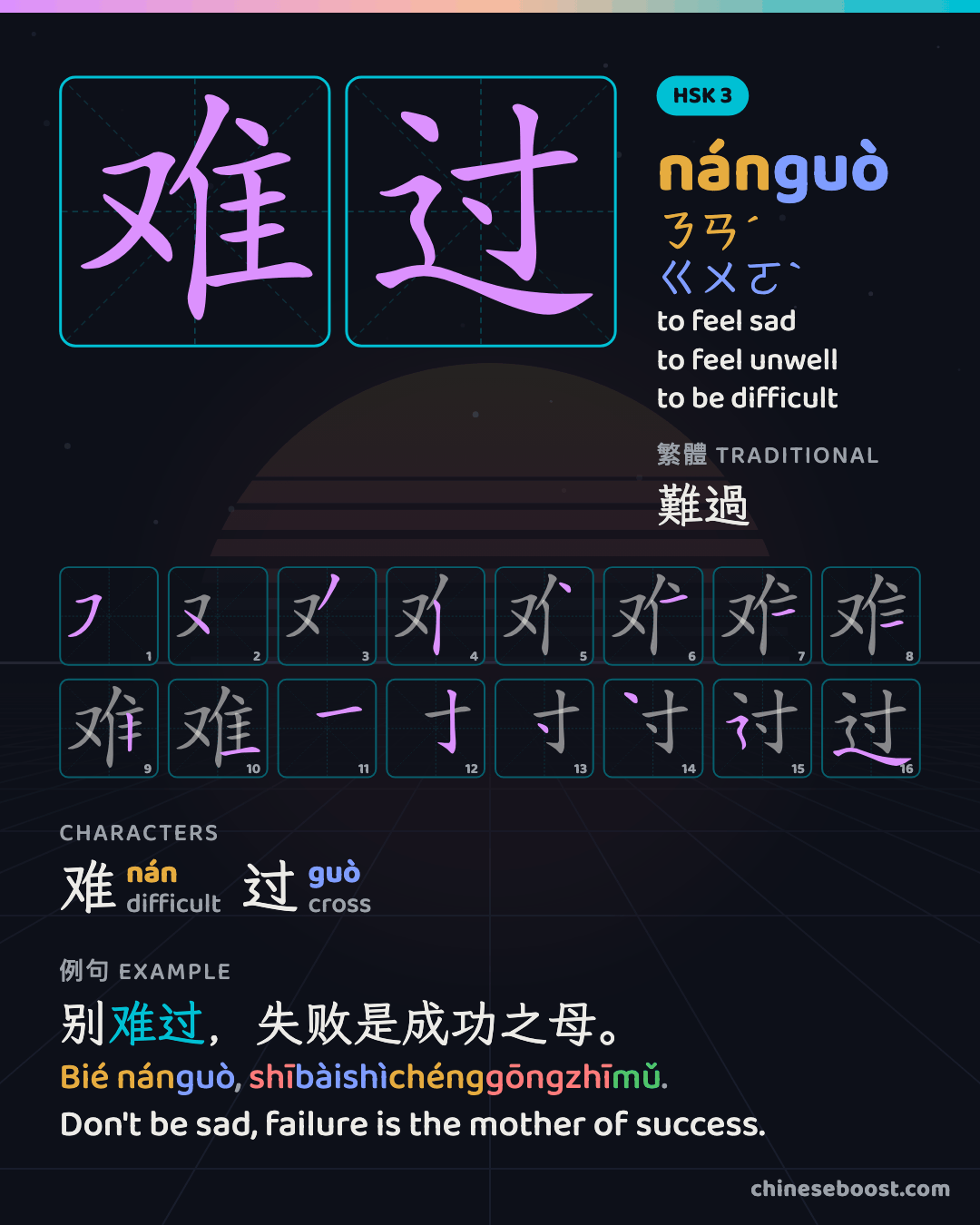
难过 is mainly about emotional pain (sad, upset) and is not normally used for physical discomfort. 难受 covers both feeling physically unwell and feeling sad, so it has the wider range.
Other words read
Words with 难过
Containing 难过
- 英雄难过美人关 even heroes have a weakness for the charms of a beautiful woman
Texts using 难过 阅读閱讀
-
她心里难过,却只笑了笑,没说话。她心裡難過,卻只笑了笑,沒說話。她心裏難過,卻只笑了笑,沒説話。
-
他知道了会多难过!他知道了會多難過!他知道了會多難過!
-
他看见骆驼这么累,心里有些难过,想对它好一点儿。他看見駱駝這麼累,心裡有些難過,想對它好一點兒。他看見駱駝這麼累,心裏有些難過,想對它好一點兒。
1 more text using 难过
-
老人坐在他的床边,难过地问:“你走了以后,我该怎么办?”老人坐在他的床邊,難過地問:“你走了以後,我該怎麼辦?”老人坐在他的牀邊,難過地問:“你走了以後,我該怎麼辦?”
Example sentences and grammar articles using 难过
Save or share this card
Chinese Boost Pro
Save as many words and example sentences as you like. Use Review and start new Exercises without daily limits. Your first subscription includes a 7-day free trial.
Sign up for a free Chinese Boost account
Save the words and sentences you find here to your own list, and hear them read aloud. You can export the list to your flashcards whenever you like.
Sources
- CC-CEDICT, CC BY-SA 4.0
- pinyinjs, Apache-2.0
- HSK 考试大纲, 中外语言交流合作中心, no licence stated