Video lesson: 了 in set patterns, and 了 for a change (le) in Mandarin Chinese grammar
视频课:“了”的用法(一)
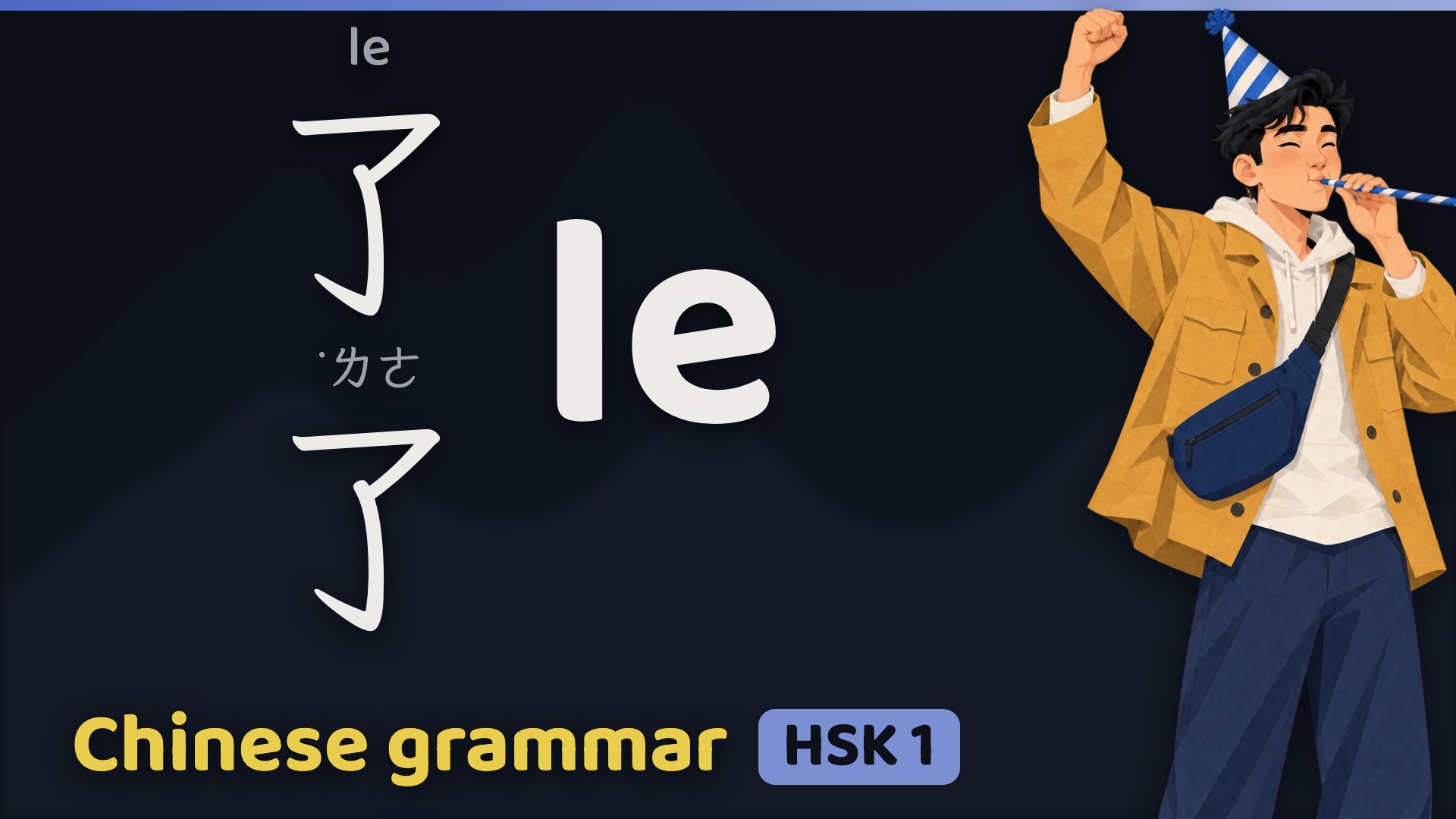
了 (le) is one of the most common words in Mandarin Chinese, and it does several different jobs. This first part goes through two of them with example sentences built up a word at a time: set patterns such as 太…了, 极了 and 死了, and a change of situation at the end of a sentence.
The grammar guide: Chinese le grammar summary (了)
Chapters
Example sentences
Vocabulary list 词单
- Vocabulary list: Video lesson: 了 in set patterns, and 了 for a change (le) in Mandarin Chinese grammar 语法:了 24 words and 12 example sentences
Writing drills 写字练习
- Vocabulary list: Video lesson: 了 in set patterns, and 了 for a change (le) in Mandarin Chinese grammar 语法:了 6 drills over 32 characters
Transcript
-
0:05
Hi, welcome back! Today we're looking at one word you'll hear in nearly every conversation in Chinese. Here it is.
-
0:12
“了”。 It's one word, but it does a lot of different jobs.
-
0:16
We'll look at four of those jobs, two in this video and two in the next. If you're just starting out, you don't need to remember every sentence. Listen for what it does in each one. First, let's watch how the character is written.
-
0:30
It only has two strokes, and it's written the same way in simplified and traditional Chinese. It's usually filed under the radical that's a vertical stroke with a hook, and that hook is its second stroke.
-
0:45
It looks a lot like the character for child, doesn't it?
-
0:48
It does. Add one more line across the middle, and you get child. “了”。子。
-
0:56
Two strokes for this one, and three for child. Right, what's the first job?
-
1:01
Job one: set patterns. These are fixed phrases, and you can learn them just as they are. The most common one says something is too much. Here's the first one, about a box. Before it's too big, it's just big. 这个盒子很大。
-
1:25
'This box is big.'
-
1:26
Now let's make it too big. 这个盒子太大了。
-
1:36
'This box is too big.' Not quite what I ordered. Let's go word by word.
-
1:43
这。
-
1:43
This.
-
1:44
个。
-
1:45
A measure word.
-
1:47
盒子。
-
1:48
Box.
-
1:49
太。
-
1:50
Too.
-
1:51
大。
-
1:51
Big.
-
1:52
“了”。
-
1:53
And this one closes the pattern.
-
1:55
All together once more. 这个盒子太大了。
-
2:01
So the word for too goes before big, and this word comes after it. Does this pattern always mean too much?
-
2:08
Not always. When you're excited, it means really, really good. 太棒了!
-
2:18
'Fantastic!' Here, the pattern shows how pleased you are. Let's go word by word.
-
2:26
太。
-
2:26
Too, or 'really'.
-
2:28
棒。
-
2:29
Great.
-
2:30
“了”。
-
2:31
Closing the pattern.
-
2:32
Once more. 太棒了!
-
2:35
Is there a well-known phrase that uses it?
-
2:39
There is. In 2019, this one was all over the Chinese internet. 我太难了。
-
2:49
'Life is so hard for me.' Usually said about something small, like a Monday morning. Can we take it word by word?
-
2:58
我。
-
2:59
I.
-
2:59
太。
-
3:00
Too.
-
3:01
难。
-
3:02
Hard.
-
3:03
“了”。
-
3:04
Closing the pattern again.
-
3:06
Once more. 我太难了。
-
3:10
Are there other set patterns like this?
-
3:12
Yes, and two of them go after the adjective. This next one is a compliment. To start with, it's only very good. 你的普通话很好。
-
3:26
'Your Mandarin is very good.' That's already a compliment.
-
3:30
Now let's make it even better. 你的普通话好极了。
-
3:39
'Your Mandarin is excellent.' I'd be happy to hear that one. Let's go word by word.
-
3:45
你。
-
3:46
You.
-
3:47
“的”。
-
3:48
The linking word, so it's your.
-
3:50
普通话。
-
3:51
Mandarin.
-
3:53
好。
-
3:53
Good.
-
3:54
极了。
-
3:55
Extremely.
-
3:57
All together. 你的普通话好极了。
-
4:00
So we say 'extremely good' in English. In Chinese, the part meaning extremely comes after good.
-
4:07
That's right. It's usually for good things. For bad things, there's often this one. This next one is about lunch. 我们饿死了!
-
4:21
'We're starving!' Let's go word by word, before somebody faints.
-
4:27
我们。
-
4:29
We.
-
4:30
饿。
-
4:30
Hungry.
-
4:31
死了。
-
4:33
To death.
-
4:34
Once more. 我们饿死了!
-
4:38
Hungry to death. We say 'starving' in English, which isn't so different.
-
4:42
So that's three patterns. 太大了。好极了。饿死了。
-
4:50
Too big, extremely good, and starving. Learn them as set phrases, and you'll hear them all the time. Now, quiz time! Which of these means 'This box is too big'? Have a think.
-
5:15
It's this one. 这个盒子太大了。 The word for too, then big, then our word to close it.
-
5:25
And the first one just says it's big. Right, what's job two?
-
5:30
Job two: a change. At the end of a sentence, it says the situation is different now. Here's the first one, about a friend who's just finished training. First, with no change in it. 他是老师。
-
5:48
'He's a teacher.' That's his job.
-
5:51
Now put it at the end. 他是老师了。
-
5:56
'He's a teacher now.' So he wasn't one before. Let's go word by word.
-
6:03
他。
-
6:03
He.
-
6:04
是。
-
6:05
Is.
-
6:06
老师。
-
6:07
Teacher.
-
6:08
“了”。
-
6:09
Now. Things have changed.
-
6:12
All together. 他是老师了。
-
6:15
In English, we add the word 'now'. In Chinese, this word does that job at the end.
-
6:23
This next one is about a baby. 她会走路了。
-
6:29
'She can walk now.' A big day for her parents. Shall we go word by word?
-
6:37
她。
-
6:38
She.
-
6:39
会。
-
6:40
Can.
-
6:40
走路。
-
6:41
Walk.
-
6:43
“了”。
-
6:43
Now. She couldn't before.
-
6:46
Once more. 她会走路了。
-
6:49
Can it also say that something has stopped?
-
6:51
It can. This next one starts as a plain habit. 我不喝酒。
-
6:59
'I don't drink.' As in alcohol.
-
7:01
Now add it at the end. 我不喝酒了。
-
7:08
'I don't drink anymore.' So I used to, and now I don't. Let's go word by word.
-
7:15
我。
-
7:16
I.
-
7:17
不。
-
7:18
Not.
-
7:19
喝酒。
-
7:20
Drink alcohol.
-
7:21
“了”。
-
7:22
Anymore.
-
7:23
All together. 我不喝酒了。
-
7:25
So English says 'now' in 'He's a teacher now', and 'anymore' in 'I don't drink anymore'. Chinese uses the same word to show what's changed.
-
7:37
This next one is internet slang. When a friend posts their holiday photos, you might comment: 我酸了。
-
7:49
'I'm jealous.' Or literally, 'I've gone sour'. Where does the idea of being sour come in? Let's take it word by word.
-
7:58
我。
-
7:59
I.
-
8:00
酸。
-
8:01
Sour.
-
8:02
“了”。
-
8:02
Now.
-
8:03
Once more. 我酸了。
-
8:06
So the word for sour is doing the work, and the change at the end makes it 'I've gone sour'. Those holiday photos have made me jealous. Time for one more quiz. What does our word add at the end of this sentence?
-
8:32
It adds 'anymore'. 我不喝酒了。 So it's 'I don't drink anymore'.
-
8:38
Let's go through today's two jobs once more. One: set patterns, like 'too big'.
-
8:46
And two: at the end of a sentence, a change. 明白了吗?
-
8:51
'Got it?' And there it is again, asking whether you understand now. In part two, we'll look at the other two jobs: a completed action, and one that's said differently. You can save the sentences from this lesson and practise them later at Chinese Boost dot com.
-
9:05
那我们下次见!
-
9:06
'See you next time!' Bye for now!
Sign up for a free Chinese Boost account
Save the words and sentences you find here to your own list, and hear them read aloud. You can export the list to your flashcards whenever you like.
Other articles about 了
- Video lesson: Four big rules for Chinese grammar (语法 yǔfǎ) A1
- The 是…的 (shì…de) construction vs 了 (le) in Chinese grammar A1
- Using 了 (le) and 过 (guò) in Chinese grammar A1