Study without daily limits with Pro
Cantonese: jan4
Classifiers (measure words)
Less often
- 一种人 one kind of person
- 三块人 three people
- 一番人 one sort of people
- 一片人 a crowd of people
- 一股人 one band of people
- 一批人 one batch of people
- 一堆人 a crowd of people
- 三口人 three people (in a family)
- 一起人 one group of people
- 一层人 one layer of people
- 一圈人 a ring of people
- 一排人 one row of people
- 一桌人 one table of people
- 一班人 one group of people
- 一帮人 one gang of people
- 一撮人 a small bunch of people
- 一伙人 one band of people
- 一行人 one party of people
- 一坨人 a clump of people
- 一队人 one column of people
- 这路人 this sort of people
- 这号人 this sort of person
- 这等人 this sort of people
- 一般人 one group of people
- 一半人 half of the people
- 一类人 one type of people
- 一流人 one class of people
- 一把子人 one gang of people
- 一坝人 one crowd of people
- 一辈人 one generation of people
- 一拨人 one batch of people
- 一曹人 one group of people
- 一簇人 one cluster of people
- 一丁人 a few people
- 一垡儿人 one batch of people
- 一火人 one group of people
- 就俩人 just a couple of people
- 一票人 one gang of people
- 三停人 three tenths of the people
Classical Chinese 文言
人 rén has 9 senses in Classical Chinese. 人 in Classical Chinese.
Other words read
In the same tone
Other words read
In the same tone
The stroke order and parts of 人
Learn to write the Chinese character 人 (rén)this character
Trace 人, then write it from memory. Each stage is passed five times.
Create a free account to finish learning to write 人. You can also save it to your word list for review (复习).
Print a writing practice sheet for 人
Hanzi writing exercises that include 人: HSK 1 vocabulary, part 1: hanzi writing 2 of 9, HSK 3 vocabulary, part 3: hanzi writing 9 of 10, HSK 4 vocabulary, part 2: hanzi writing 5 of 11 and 79 more.
人 as a radical 部首
人 is a 部首 (bùshǒu), a radical. Chinese dictionaries file characters under radicals. This dictionary files 404 characters under 人 as a radical. Look a character up by the 人 radical
人 as a component 部件
人 appears in 409 characters in this dictionary, either directly (16 characters) or within a larger component.
See all characters containing 人Easy to confuse with 人
-
入
Similar shape
Different readings. 入 (rù) has a long right stroke over the left and means to enter, as in 入口 (rùkǒu); 人 (rén) has the left stroke on top and means person, as in 人类 (rénlèi).
Potential verbal descriptions
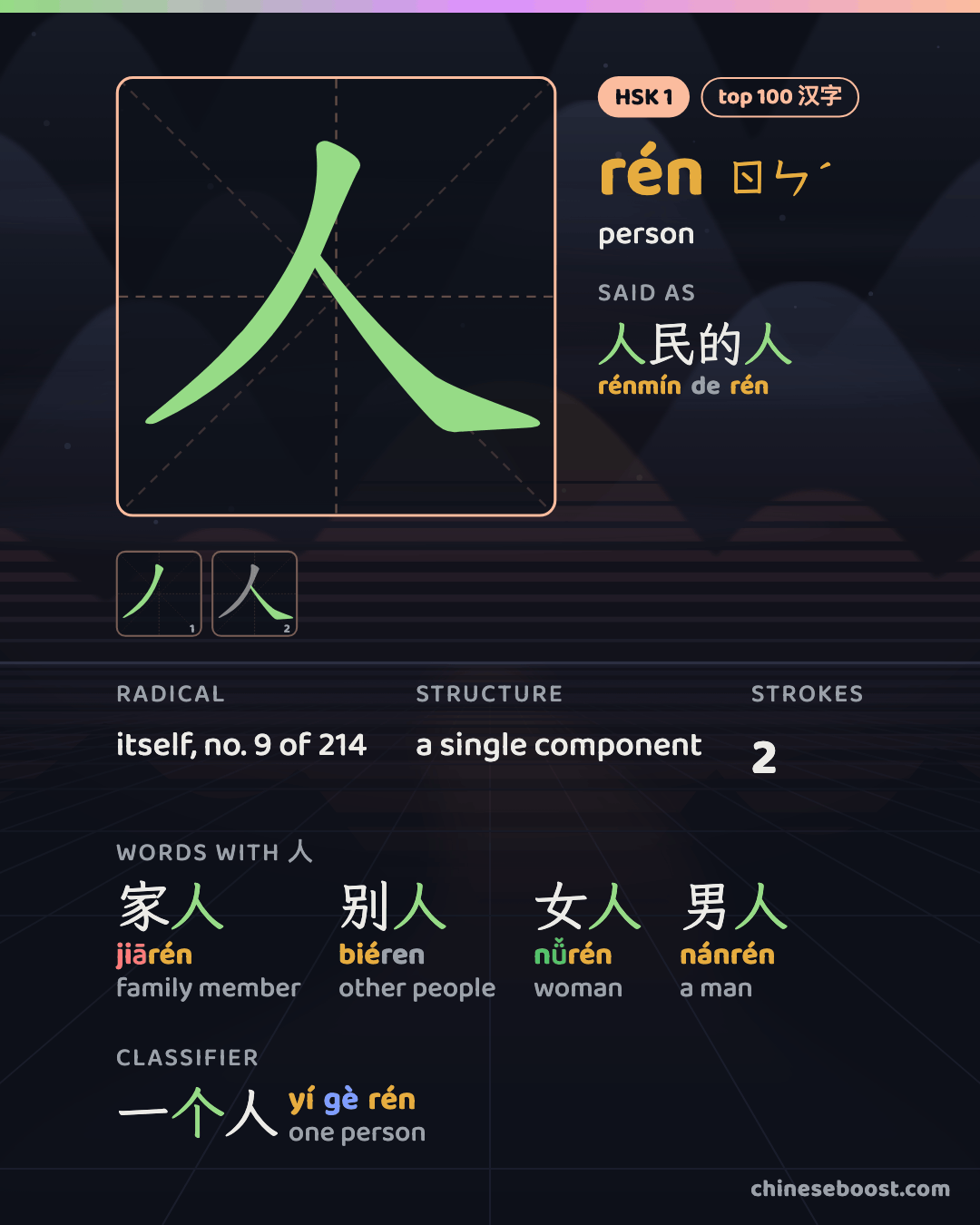
- 人民的人
Words with 人
Starting with 人
- 人民 people
- 人民代表大会 people's congress
- 人们 people
- 人口 population
- 人员 staff
- 人民政府 people's government
- 人大 people's congress, a legislative body within the PRC's system of government at any of various levels – national, provincial, municipal, county or township
- 人物 person
- 人类 humanity
- 人数 number of people
- 人才 talent
- 人家 household
Ending with 人
Containing 人
- 全国人民代表大会 National People's Congress
- 中华人民共和国 People's Republic of China
- 全国人大常委会 Standing Committee of the National People's Congress
- 全国人民代表大会常务委员会 Standing Committee of the National People's Congress
- 全国人大 National People's Congress (NPC)
- 总人口 total population
- 最高人民法院 Supreme People's Court
- 最高人民检察院 PRC Supreme People's Procuratorate
- 工作人员 staff member
- 老人家 polite term for old woman or man
- 中国人民解放军 People's Liberation Army (PLA), the unified armed forces of the People's Republic of China
- 工人阶级 working class
Words with 人
Starting with 人
- 人民 people
- 人民代表大會 people's congress
- 人們 people
- 人口 population
- 人員 staff
- 人民政府 people's government
- 人大 people's congress, a legislative body within the PRC's system of government at any of various levels – national, provincial, municipal, county or township
- 人物 person
- 人類 humanity
- 人數 number of people
- 人才 talent
- 人家 household
Ending with 人
Containing 人
- 全國人民代表大會 National People's Congress
- 中華人民共和國 People's Republic of China
- 全國人大常委會 Standing Committee of the National People's Congress
- 全國人民代表大會常務委員會 Standing Committee of the National People's Congress
- 全國人大 National People's Congress (NPC)
- 總人口 total population
- 最高人民法院 Supreme People's Court
- 最高人民檢察院 PRC Supreme People's Procuratorate
- 工作人員 staff member
- 老人家 polite term for old woman or man
- 中國人民解放軍 People's Liberation Army (PLA), the unified armed forces of the People's Republic of China
- 工人階級 working class
Texts using 人 阅读閱讀
-
有一个人问我:“你是来上汉语课的吗?”有一個人問我:“你是來上漢語課的嗎?”有一個人問我:“你是來上漢語課的嗎?”
-
店里人很多,一个我不认识的人坐在我对面。店裡人很多,一個我不認識的人坐在我對面。店裏人很多,一個我不認識的人坐在我對面。
-
那我们买两个吧,一人二十五块。那我們買兩個吧,一人二十五塊。
24 more texts using 人
-
我不喜欢跟不认识的人说话,就在车上读书。我不喜歡跟不認識的人說話,就在車上讀書。我不喜歡跟不認識的人説話,就在車上讀書。
-
看病前,有些人想问医生很多问题,可是一见到医生,就不知道要问什么了。看病前,有些人想問醫生很多問題,可是一見到醫生,就不知道要問什麼了。看病前,有些人想問醫生很多問題,可是一見到醫生,就不知道要問什麼了。
-
一起坐出租车吧,我们一人一半。一起坐出租車吧,我們一人一半。
-
星期日早上,一些人很早就起床,七点就到大学一起学唱歌。星期日早上,一些人很早就起床,七點就到大學一起學唱歌。星期日早上,一些人很早就起牀,七點就到大學一起學唱歌。
-
一个人说:“那儿有一家。”一個人說:“那兒有一家。”一個人説:“那兒有一家。”
-
家里一下子人多起来了!家裡一下子人多起來了!家裏一下子人多起來了!
-
妹妹说:“下次你回家,我要站在你旁边,让家里人看看现在谁高!”妹妹說:“下次你回家,我要站在你旁邊,讓家裡人看看現在誰高!”妹妹説:“下次你回家,我要站在你旁邊,讓家裏人看看現在誰高!”
-
经理要找个人去管新开的店。經理要找個人去管新開的店。
-
许静在一家公司上班,一个人住在旧楼里。許靜在一家公司上班,一個人住在舊樓裡。許靜在一家公司上班,一個人住在舊樓裏。
-
她怕问了让人觉得自己不好好工作,以后不让她留下,就没敢问,只在电话里告诉妈妈:“工作太忙,今年不回去了。”她怕問了讓人覺得自己不好好工作,以後不讓她留下,就沒敢問,只在電話裡告訴媽媽:“工作太忙,今年不回去了。”她怕問了讓人覺得自己不好好工作,以後不讓她留下,就沒敢問,只在電話裏告訴媽媽:“工作太忙,今年不回去了。”
-
保安跟她是一个村子来的,想让她高兴一点,就开玩笑说:“你人还在这儿,心已经回家了吧?”保安跟她是一個村子來的,想讓她高興一點,就開玩笑說:“你人還在這兒,心已經回家了吧?”保安跟她是一個村子來的,想讓她高興一點,就開玩笑説:“你人還在這兒,心已經回家了吧?”
-
大臣对国王说:我以前在路上遇到过一个人,坐着马车往北走。大臣對國王說:我以前在路上遇到過一個人,坐著馬車往北走。大臣對國王説:我以前在路上遇到過一個人,坐着馬車往北走。
-
老板以为这件事只有自己和小李知道,心里十分生气:连现在的经理都来祝贺了,小李一定已经到处跟人说了!老板以為這件事只有自己和小李知道,心裡十分生氣:連現在的經理都來祝賀了,小李一定已經到處跟人說了!老板以為這件事只有自己和小李知道,心裏十分生氣:連現在的經理都來祝賀了,小李一定已經到處跟人説了!
-
我以前没一个人住过,他每天晚上都打电话来,问我吃饭没有、门关好没有、衣服穿得暖不暖。我以前沒一個人住過,他每天晚上都打電話來,問我吃飯沒有、門關好沒有、衣服穿得暖不暖。我以前沒一個人住過,他每天晚上都打電話來,問我吃飯沒有、門關好沒有、衣服穿得暖不暖。
-
山脚下有一处泉水,清清的,全村人都喝这里的水。山腳下有一處泉水,清清的,全村人都喝這裡的水。山腳下有一處泉水,清清的,全村人都喝這裏的水。
-
苏琪想了一夜:那个男朋友,她一点儿也不记得;每天来的这个人,她却已经很了解了。蘇琪想了一夜:那個男朋友,她一點兒也不記得;每天來的這個人,她卻已經很了解了。蘇琪想了一夜:那個男朋友,她一點兒也不記得;每天來的這個人,她卻已經很了解了。
-
可是,那个人对我很好,常常让我笑,还愿意听我说心里的事。可是,那個人對我很好,常常讓我笑,還願意聽我說心裡的事。可是,那個人對我很好,常常讓我笑,還願意聽我説心裏的事。
-
等我走了,请您把厨师、管账的人和家里的医生都赶走。等我走了,請您把廚師、管賬的人和家裡的醫生都趕走。等我走了,請您把廚師、管賬的人和家裏的醫生都趕走。
-
从前,有两个小偷,把附近的人家都偷了个遍,只剩一对老夫妻家没去过。從前,有兩個小偷,把附近的人家都偷了個遍,只剩一對老夫妻家沒去過。從前,有兩個小偷,把附近的人家都偷了個遍,只剩一對老夫妻家沒去過。
-
老婆,家里做饭的、打扫卫生的,还有其他干活的人,都说跟你在一起很累。老婆,家裡做飯的、打掃衛生的,還有其他幹活的人,都說跟你在一起很累。老婆,家裏做飯的、打掃衞生的,還有其他幹活的人,都説跟你在一起很累。
-
她答不上来,两个人都越来越不开心。她答不上來,兩個人都越來越不開心。她答不上來,兩個人都越來越不開心。
-
一次,他带人去跟邻国打仗,输了,只好坐着马车逃跑。一次,他帶人去跟鄰國打仗,輸了,只好坐著馬車逃跑。一次,他帶人去跟鄰國打仗,輸了,只好坐着馬車逃跑。
-
朋友见到县官,便提出了一个请求:那个人有一所漂亮的房子。朋友見到縣官,便提出了一個請求:那個人有一所漂亮的房子。朋友見到縣官,便提出了一個請求:那個人有一所漂亮的房子。
-
吃晚饭的时候,他向店里的人打听去下一个村子的路。吃晚飯的時候,他向店裡的人打聽去下一個村子的路。吃晚飯的時候,他向店裏的人打聽去下一個村子的路。
Example sentences and grammar articles using 人
Save or share this card
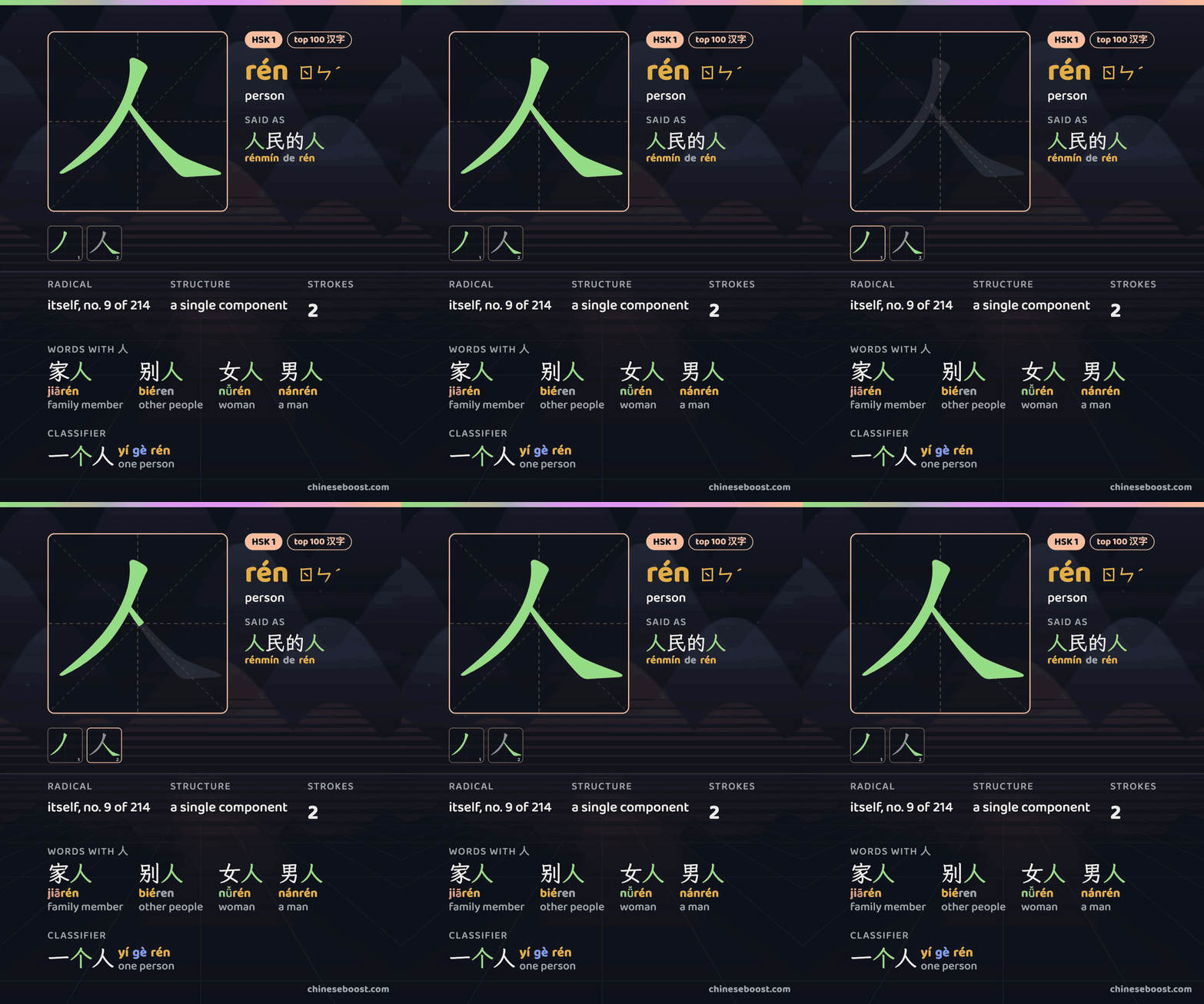
Learn to write 人
Trace 人, then write it from memory.
Start without an account.
Go to the writing drill Practise 人 with other characters Print a practice sheet
Free: 5 new Exercises a day. Pro: no daily limit. About Pro
Ancient forms of 人 (古文字)


Chinese Boost Pro
Save as many words and example sentences as you like. Use Review and start new Exercises without daily limits. Your first subscription includes a 7-day free trial.
Sign up for a free Chinese Boost account
Save the words and sentences you find here to your own list, and hear them read aloud. You can export the list to your flashcards whenever you like.
Sources
- CC-CEDICT, CC BY-SA 4.0
- pinyinjs, Apache-2.0
- HSK 考试大纲, 中外语言交流合作中心, no licence stated
- Make Me a Hanzi, from fonts by Arphic Technology Co., Ltd., Arphic Public License
- Rime 五笔字型 (Wubi 86), from ibus-table, LGPL-3.0. Wubi was invented by Wang Yongmin (王永民).
- Ancient Chinese Characters Project (Wikimedia Commons), after Richard Sears' Chinese Etymology, public domain