Study without daily limits with Pro
-
bound form
-
literary
-
Cantonese: jau5, jau6
Synonyms and antonyms
Classical Chinese 文言
有 yǒu has 11 senses in Classical Chinese. 有 in Classical Chinese.
Other words read
Other words read
Other words read
Other words read
The stroke order and parts of 有
Learn to write the Chinese character 有 (yǒu)this character
Trace 有, then write it from memory. Each stage is passed five times.
Create a free account to finish learning to write 有. You can also save it to your word list for review (复习).
Print a writing practice sheet for 有
Hanzi writing exercises that include 有: HSK 1 vocabulary, part 1: hanzi writing 1 of 9, HSK 2 vocabulary, part 2: hanzi writing 9 of 9, HSK 3 vocabulary, part 2: hanzi writing 3 of 11 and 50 more.
有 as a component 部件
有 appears in 20 characters in this dictionary, either directly (15 characters) or within a larger component.
See all characters containing 有Potential verbal descriptions
- 拥有的有
Words with 有
Starting with 有
Ending with 有
Containing 有
- 康有为 Kang Youwei (1858-1927), Confucian intellectual, educator and would-be reformer, main leader of the failed reform movement of 1898
- 所有者 proprietor
- 所有人 everyone
- 所有权 ownership
- 所有制 system of ownership
- 公有制 public ownership
- 强有力 strong
- 私有制 private ownership of property
- 别有风味 have a distinctive flavour
- 卓有成效 highly effective
- 行之有效 be effective
- 别有用心 have an ulterior motive
Words with 有
Starting with 有
Ending with 有
Containing 有
- 康有為 Kang Youwei (1858-1927), Confucian intellectual, educator and would-be reformer, main leader of the failed reform movement of 1898
- 所有者 proprietor
- 所有人 everyone
- 所有權 ownership
- 所有制 system of ownership
- 公有制 public ownership
- 強有力 strong
- 私有制 private ownership of property
- 別有風味 have a distinctive flavour
- 卓有成效 highly effective
- 行之有效 be effective
- 別有用心 have an ulterior motive
Texts using 有 阅读閱讀
-
有一个人问我:“你是来上汉语课的吗?”有一個人問我:“你是來上漢語課的嗎?”有一個人問我:“你是來上漢語課的嗎?”
-
公司那边有一家小饭店,我可以先在那里吃早饭,再去见她。公司那邊有一家小飯店,我可以先在那裡吃早飯,再去見她。公司那邊有一家小飯店,我可以先在那裏吃早飯,再去見她。
-
今天下班后有时间吗?今天下班後有時間嗎?
22 more texts using 有
-
桌子上有鸡蛋和菜,都是爸爸爱吃的东西。桌子上有雞蛋和菜,都是爸爸愛吃的東西。桌子上有雞蛋和菜,都是爸爸愛吃的東西。
-
这些饺子怎么有大有小?這些餃子怎麼有大有小?
-
白天,桌上有电脑和书;晚上,我和女朋友在这里一起吃饭。白天,桌上有電腦和書;晚上,我和女朋友在這裡一起吃飯。白天,桌上有電腦和書;晚上,我和女朋友在這裏一起吃飯。
-
我家后面有几只狗在雪地里玩,我家的狗也跟它们一起玩。我家後面有幾隻狗在雪地裡玩,我家的狗也跟它們一起玩。我家後面有幾隻狗在雪地裏玩,我家的狗也跟它們一起玩。
-
他问:“请问,哪里有书店?”他問:“請問,哪裡有書店?”他問:“請問,哪裏有書店?”
-
回到楼上,大家都有了喝的,只有新雨的桌上什么也没有。回到樓上,大家都有了喝的,只有新雨的桌上什麼也沒有。回到樓上,大家都有了喝的,只有新雨的桌上什麼也沒有。
-
两个孩子有很多话想跟我们说,到了十一点还不想睡觉。兩個孩子有很多話想跟我們說,到了十一點還不想睡覺。兩個孩子有很多話想跟我們説,到了十一點還不想睡覺。
-
今天他有一个考试,小美一大早就去妈妈家帮忙。今天他有一個考試,小美一大早就去媽媽家幫忙。
-
有一次,他说:“第一个月的钱还没拿到,没钱坐公交车,只好每天走一个小时去上班。”有一次,他說:“第一個月的錢還沒拿到,沒錢坐公交車,只好每天走一個小時去上班。”有一次,他説:“第一個月的錢還沒拿到,沒錢坐公交車,只好每天走一個小時去上班。”
-
这一次,旁边的保安听得出来,她心里有多高兴。這一次,旁邊的保安聽得出來,她心裡有多高興。這一次,旁邊的保安聽得出來,她心裏有多高興。
-
他还是不担心,说:‘给我赶车的人也很有经验。’他還是不擔心,說:‘給我趕車的人也很有經驗。’他還是不擔心,説:‘給我趕車的人也很有經驗。’
-
山脚下有一处泉水,清清的,全村人都喝这里的水。山腳下有一處泉水,清清的,全村人都喝這裡的水。山腳下有一處泉水,清清的,全村人都喝這裏的水。
-
还好有他帮忙,妈妈也很喜欢他。還好有他幫忙,媽媽也很喜歡他。還好有他幫忙,媽媽也很喜歡他。
-
有个男人的名字看起来也不是真的,照片上是大海。有個男人的名字看起來也不是真的,照片上是大海。有個男人的名字看起來也不是真的,照片上是大海。
-
有一天,管家病得很重,眼看就要去世了。
-
从前,有两个小偷,把附近的人家都偷了个遍,只剩一对老夫妻家没去过。從前,有兩個小偷,把附近的人家都偷了個遍,只剩一對老夫妻家沒去過。從前,有兩個小偷,把附近的人家都偷了個遍,只剩一對老夫妻家沒去過。
-
一位年轻的妻子总怀疑丈夫有了别的女人。一位年輕的妻子總懷疑丈夫有了別的女人。一位年輕的妻子總懷疑丈夫有了別的女人。
-
从前,有位老人,射箭的本领很高。從前,有位老人,射箭的本領很高。從前,有位老人,射箭的本領很高。
-
古时候,中国有个男人,案子拖了三年还没有结果。古時候,中國有個男人,案子拖了三年還沒有結果。古時候,中國有個男人,案子拖了三年還沒有結果。
-
他本来想说有警察,可他了解大勇:大勇一定会笑着说,小路也能走。他本來想說有警察,可他了解大勇:大勇一定會笑著說,小路也能走。他本來想説有警察,可他了解大勇:大勇一定會笑着説,小路也能走。
-
第二天早上,夹子里有一只灰老鼠,已经死了。第二天早上,夾子裡有一隻灰老鼠,已經死了。第二天早上,夾子裏有一隻灰老鼠,已經死了。
-
一路上虽然有几段坡路,但驴走得很稳。一路上雖然有幾段坡路,但驢走得很穩。
Example sentences and grammar articles using 有
Save or share this card
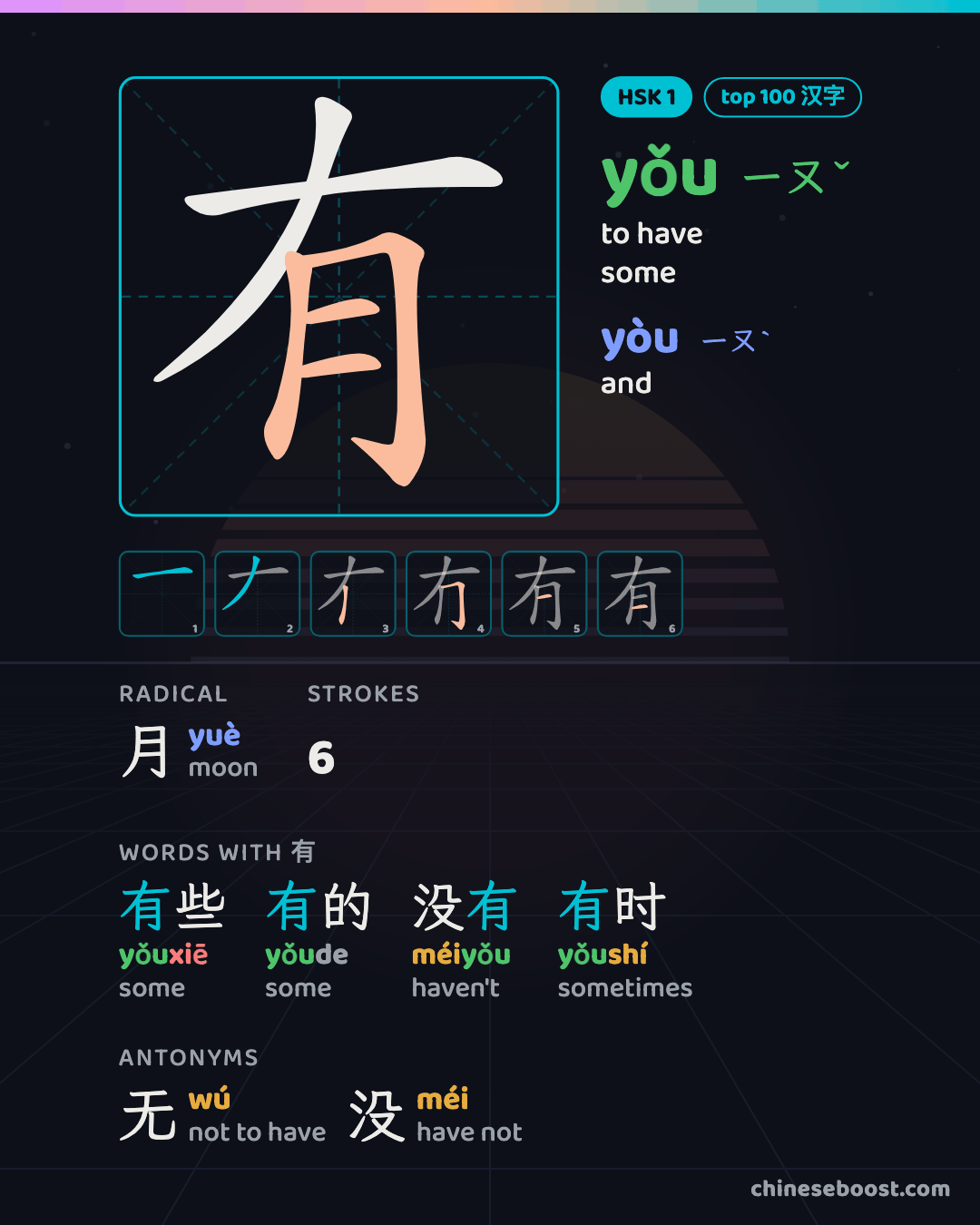
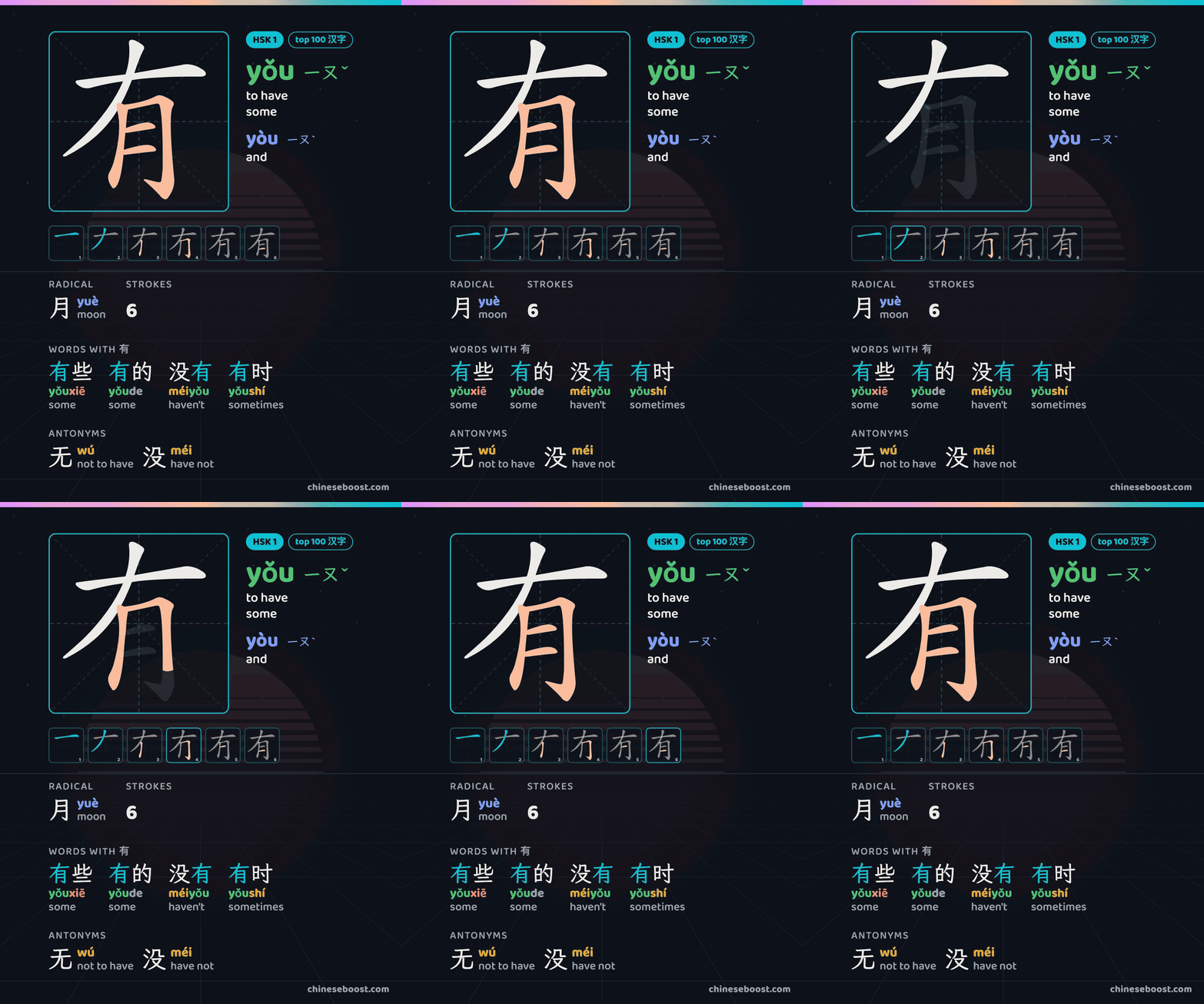
Learn to write 有
Trace 有, then write it from memory.
Start without an account.
Go to the writing drill Practise 有 with other characters Print a practice sheet
Free: 5 new Exercises a day. Pro: no daily limit. About Pro
Ancient forms of 有 (古文字)


Chinese Boost Pro
Save as many words and example sentences as you like. Use Review and start new Exercises without daily limits. Your first subscription includes a 7-day free trial.
Sign up for a free Chinese Boost account
Save the words and sentences you find here to your own list, and hear them read aloud. You can export the list to your flashcards whenever you like.
Sources
- CC-CEDICT, CC BY-SA 4.0
- pinyinjs, Apache-2.0
- Chinese Boost, CC BY-SA 4.0
- HSK 考试大纲, 中外语言交流合作中心, no licence stated
- Make Me a Hanzi, from fonts by Arphic Technology Co., Ltd., Arphic Public License
- Rime 五笔字型 (Wubi 86), from ibus-table, LGPL-3.0. Wubi was invented by Wang Yongmin (王永民).
- Ancient Chinese Characters Project (Wikimedia Commons), after Richard Sears' Chinese Etymology, public domain