Study without daily limits with Pro
-
physics
-
Cantonese: nang4
Classical Chinese 文言
能 néng has 10 senses in Classical Chinese. 能 in Classical Chinese.
Other words read
In the same tone
- 𰚔 shaggy
Other words read
In the same tone
- 㲰 shaggy
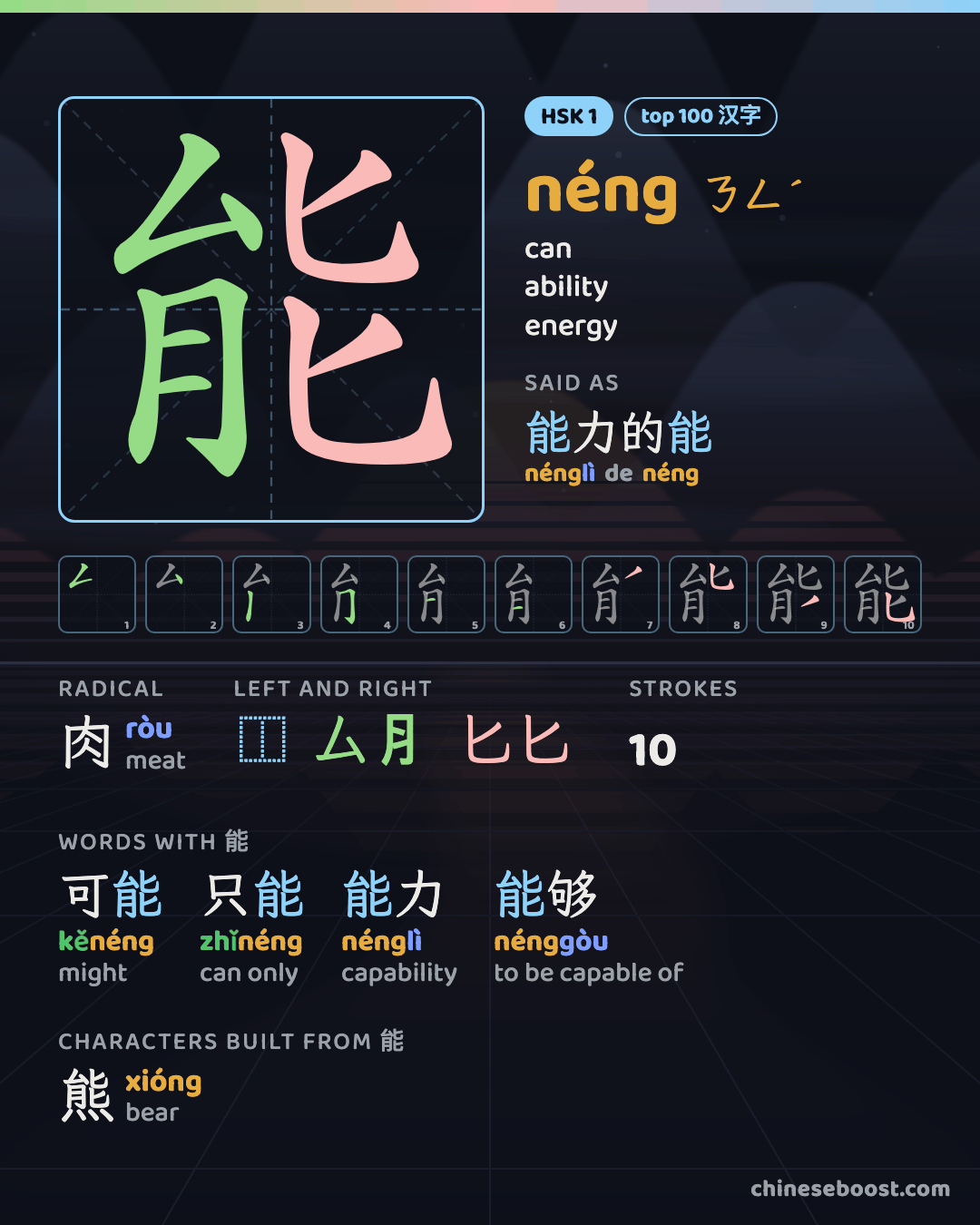
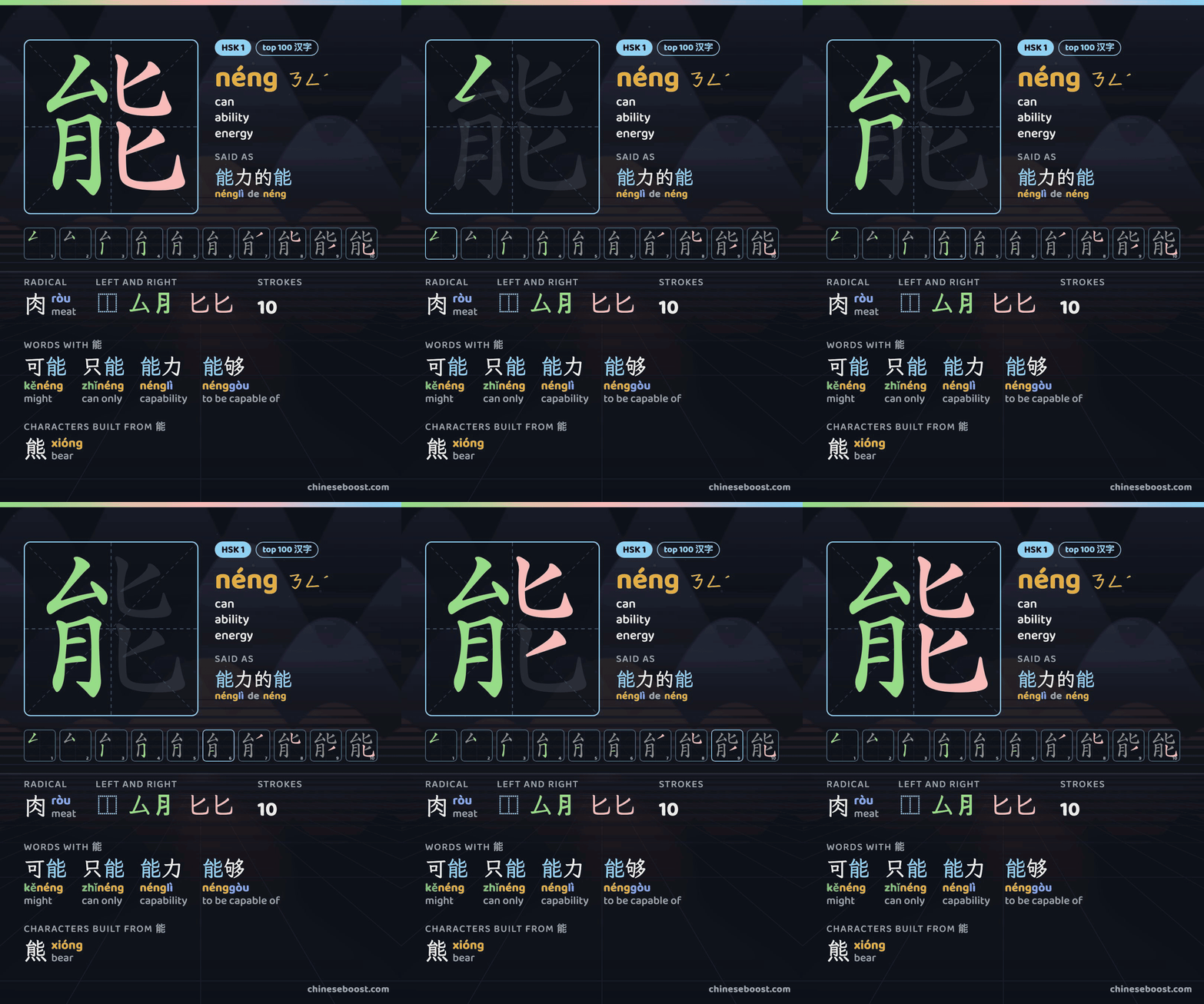
The stroke order and parts of 能
- 部首 radical
- ⺼ a form of 肉
- 笔画 strokes
- 10, with 6 after the 部首
- 结构 structure
- 左右结构
- 偏旁 parts
- 厶⺼匕匕厶+⺼meat+匕spoon(placeholder)+匕spoon(placeholder)=canA story to help you remember, not the character’s history.“Private meat, and two spoons that can finish it.”
- 仓颉 Cangjie code
- 戈月心心 IBPP
- 五笔 Wubi code
- CEXX
Learn to write the Chinese character 能 (néng)this character
Trace 能, then write it from memory. Each stage is passed five times.
Create a free account to finish learning to write 能. You can also save it to your word list for review (复习).
Print a writing practice sheet for 能
Hanzi writing exercises that include 能: HSK 1 vocabulary, part 1: hanzi writing 7 of 9, HSK 2 vocabulary, part 1: hanzi writing 6 of 10, HSK 3 vocabulary, part 4: hanzi writing 5 of 8 and 35 more.
能 as a component 部件
能 appears in 9 characters in this dictionary, either directly (5 characters) or within a larger component.
See all characters containing 能Potential verbal descriptions
- 能力的能
Words with 能
Starting with 能
Ending with 能
Containing 能
- 可能性 possibility
- 不能不 have to
- 生产能力 manufacturing ability
- 无能为力 powerless to do anything about it
- 功能性 functionality
- 难能可贵 rare and precious
- 力所能及 within one's powers
- 官能团 functional group
- 国际原子能机构 International Atomic Energy Agency
- 精明能干 able and efficient
- 耳熟能详 what's frequently heard can be repeated in detail
- 不能自已 be beside oneself
Words with 能
Starting with 能
Ending with 能
Containing 能
- 可能性 possibility
- 不能不 have to
- 生產能力 manufacturing ability
- 無能為力 powerless to do anything about it
- 功能性 functionality
- 難能可貴 rare and precious
- 力所能及 within one's powers
- 官能團 functional group
- 國際原子能機構 International Atomic Energy Agency
- 精明能幹 able and efficient
- 耳熟能詳 what's frequently heard can be repeated in detail
- 不能自已 be beside oneself
Texts using 能 阅读閱讀
-
能听见吗?能聽見嗎?能聽見嗎?
-
要是每个星期都能过年,就好了。要是每個星期都能過年,就好了。要是每個星期都能過年,就好了。
-
过了一会儿,她已经能自己游一点儿了。過了一會兒,她已經能自己遊一點兒了。過了一會兒,她已經能自己遊一點兒了。
13 more texts using 能
-
妈妈拿出一条红裤子,说:“考试穿红色的,能考得好!”媽媽拿出一條紅褲子,說:“考試穿紅色的,能考得好!”媽媽拿出一條紅褲子,説:“考試穿紅色的,能考得好!”
-
不过,我想了很久,这份工作,你能比别人做得更好。不過,我想了很久,這份工作,你能比別人做得更好。不過,我想了很久,這份工作,你能比別人做得更好。
-
几个月后,阿成的工作做得不错,每个月都能按时拿到钱。幾個月後,阿成的工作做得不錯,每個月都能按時拿到錢。幾個月後,阿成的工作做得不錯,每個月都能按時拿到錢。
-
他买了三本讲睡觉的书,觉得照着书上说的做,就能睡好。他買了三本講睡覺的書,覺得照著書上說的做,就能睡好。他買了三本講睡覺的書,覺得照着書上説的做,就能睡好。
-
连个秘密都守不住,怎么能当经理?連個秘密都守不住,怎麼能當經理?連個秘密都守不住,怎麼能當經理?
-
大家实在受不了了,就一起出钱,让我去别处买大树,种回山上,希望泉水能再流出来。大家實在受不了了,就一起出錢,讓我去別處買大樹,種回山上,希望泉水能再流出來。大家實在受不了了,就一起出錢,讓我去別處買大樹,種回山上,希望泉水能再流出來。
-
医生更是常常说,不管我得什么病,他都能治好。醫生更是常常說,不管我得什麼病,他都能治好。醫生更是常常説,不管我得什麼病,他都能治好。
-
他们听说这家养了两头很胖的猪,能卖不少钱,就决定当天晚上去偷猪。他們聽說這家養了兩頭很胖的豬,能賣不少錢,就決定當天晚上去偷豬。他們聽説這家養了兩頭很胖的豬,能賣不少錢,就決定當天晚上去偷豬。
-
一天,她在报纸上读到,市里的警察有了一台测谎仪,能判断一个人有没有说谎,几乎每次都对。一天,她在報紙上讀到,市里的警察有了一臺測謊儀,能判斷一個人有沒有說謊,幾乎每次都對。一天,她在報紙上讀到,市里的警察有了一台測謊儀,能判斷一個人有沒有説謊,幾乎每次都對。
-
老人一听,说:“那我就能活了。”老人一聽,說:“那我就能活了。”老人一聽,説:“那我就能活了。”
-
如果他被判有罪,房子被收走,能不能给我?如果他被判有罪,房子被收走,能不能給我?如果他被判有罪,房子被收走,能不能給我?
-
他本来想说有警察,可他了解大勇:大勇一定会笑着说,小路也能走。他本來想說有警察,可他了解大勇:大勇一定會笑著說,小路也能走。他本來想説有警察,可他了解大勇:大勇一定會笑着説,小路也能走。
-
虽然有些地方不太平坦,但路比较近,驴也能走。雖然有些地方不太平坦,但路比較近,驢也能走。雖然有些地方不太平坦,但路比較近,驢也能走。
Example sentences and grammar articles using 能
Save or share this card
Learn to write 能
Trace 能, then write it from memory.
Start without an account.
Go to the writing drill Practise 能 with other characters Print a practice sheet
Free: 5 new Exercises a day. Pro: no daily limit. About Pro
Ancient forms of 能 (古文字)


Chinese Boost Pro
Save as many words and example sentences as you like. Use Review and start new Exercises without daily limits. Your first subscription includes a 7-day free trial.
Sign up for a free Chinese Boost account
Save the words and sentences you find here to your own list, and hear them read aloud. You can export the list to your flashcards whenever you like.
Sources
- CC-CEDICT, CC BY-SA 4.0
- pinyinjs, Apache-2.0
- HSK 考试大纲, 中外语言交流合作中心, no licence stated
- Make Me a Hanzi, from fonts by Arphic Technology Co., Ltd., Arphic Public License
- Rime 五笔字型 (Wubi 86), from ibus-table, LGPL-3.0. Wubi was invented by Wang Yongmin (王永民).
- 《说文解字》 (许慎), from shuowen.org's transcription, Apache-2.0
- 《汉字源流字典》 (谷衍奎), 语文出版社, 2008
- Ancient Chinese Characters Project (Wikimedia Commons), after Richard Sears' Chinese Etymology, public domain